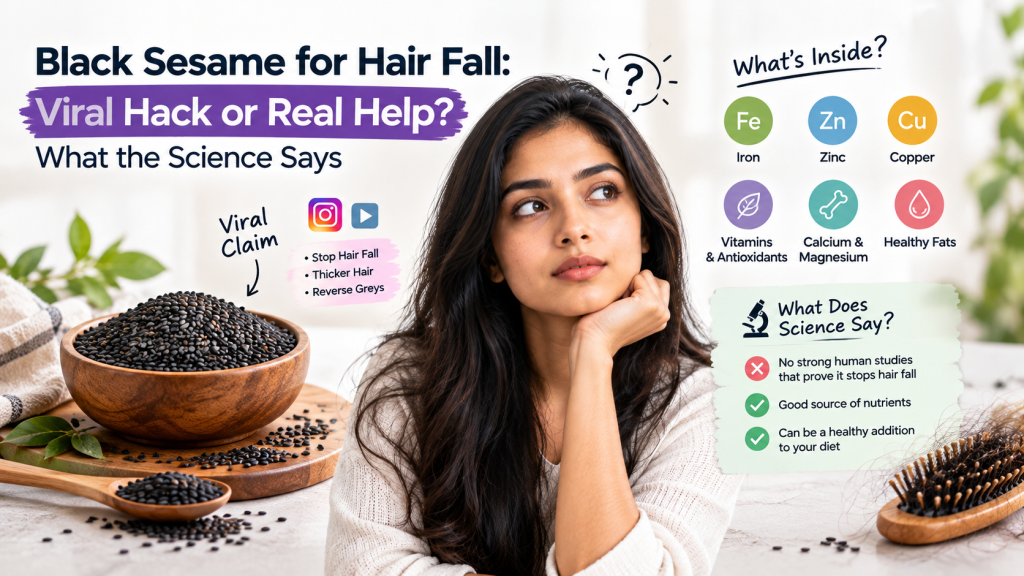
Scroll through Instagram for five minutes and you’ll find someone swearing that a spoonful of black sesame seeds a day will stop your hair fall, thicken your strands, and even bring back your natural colour. The videos are persuasive, the before-and-after claims are dramatic, and the remedy costs almost nothing.
But does it work? Here is what black sesame actually does, what it can’t do, and what dermatologists and nutrition experts generally say.
Why Black Sesame Is Said to Help Hair
Black sesame (kala til) has a long history in Ayurveda and traditional Chinese medicine, where it is linked to hair and bone health. The seeds are also nutritionally dense. They contain:
- Iron: low iron is one of the most common nutritional causes of diffuse hair shedding, especially in women.
- Zinc: involved in hair follicle repair and the function of the oil glands around the scalp.
- Copper: supports pigment production and plays a role in hair structure.
- Calcium and magnesium: support general tissue and nerve function.
- Vitamin E and antioxidants (such as sesamin): help counter oxidative stress.
- B vitamins and healthy fats: support skin and scalp health.
On paper, that is an impressive list, and it’s the main reason the trend caught on.
What the Evidence Actually Shows
Here is where the claim gets complicated. There are no solid human clinical trials showing that eating black sesame seeds reduces hair fall or promotes regrowth. Most of the support comes from traditional use, nutrient content, and a small number of lab or animal studies on sesame’s antioxidant properties. Those findings are interesting, but they don’t prove the same effect in people.
Nutritionists point out that a nutrient being present in a food doesn’t mean eating that food will fix a problem. A tablespoon of black sesame seeds provides only modest amounts of iron and zinc compared with what many people need daily. It can be a useful addition to a balanced diet, but it is unlikely to correct a real deficiency on its own.
Why Hair Fall Happens (and Why a Single Food Rarely Fixes It)
Dermatologists stress that “hair fall” is a symptom with many possible causes, including:
- Iron, vitamin D, B12 or protein deficiency
- Thyroid disorders
- PCOS and other hormonal imbalances
- Stress, illness, or major weight loss (often causing temporary shedding called telogen effluvium)
- Postpartum changes
- Genetic pattern hair loss (androgenetic alopecia)
- Scalp conditions like dandruff or fungal infections
If your hair fall comes from a thyroid issue or genetic hair loss, no seed will reverse it. This is the biggest problem with viral remedies. They treat hair fall as one problem with one fix, when it actually needs a diagnosis first.
Can Black Sesame Turn Grey Hair Black?
Another popular claim is that black sesame can reverse greying. Most experts say this is not supported. Greying is largely driven by genetics and age, as the pigment cells in follicles gradually decline. Some nutrient deficiencies (like B12 or copper) can contribute to early greying, and correcting them may help in those specific cases, but sesame is not a proven cure.
So, Is It Worth Eating?
Yes, as part of a healthy diet, not as a miracle fix. Black sesame is a nutritious food, and there’s no harm in enjoying it if you tolerate it well. It fits easily into Indian kitchens in til chikki, laddoos, chutneys, or sprinkled over salads and rotis.
A few practical points:
- Amount: Around 1 to 2 teaspoons a day is the usual range suggested. More is not better.
- Calories: Sesame is energy-dense, so keep portions in check if you’re watching your weight.
- Allergy: Sesame is a recognised allergen. Stop if you notice itching, swelling, or breathing trouble.
- Medical conditions: If you take medication for blood sugar or blood pressure, or have kidney stone issues, check with your doctor before eating it in large amounts.
- Pregnancy: Traditional advice often cautions against large quantities, so ask your doctor.
What Actually Works for Hair Fall
If you’re losing more hair than usual, experts recommend a more reliable path:
- Get tested. Ask a doctor about iron/ferritin, vitamin D, B12, and thyroid levels.
- Eat enough protein. Hair is made of keratin, a protein, so low intake shows up quickly.
- Manage stress and sleep. Both strongly influence shedding cycles.
- Treat the scalp. Dandruff and inflammation can worsen hair fall.
- See a dermatologist if shedding lasts more than a few months, you see widening parts or bald patches, or it’s sudden and severe. Proven treatments exist for several types of hair loss.
The Bottom Line
Black sesame is a healthy, nutrient-rich food, but the claim that it “fixes” hair fall is not backed by strong evidence. Think of it as a small supporting player in a good diet, not a cure. If you’re worried about thinning hair, finding the root cause will do far more for you than any viral remedy.
Disclaimer: This article is for general information and isn’t a substitute for professional medical advice. Please consult a qualified doctor or dermatologist about persistent hair loss.